
Trace Grant County Former Owners
Work backward from the newest dependable land description when tracing prior owners in Grant County. Several offices hold useful records. Their dates and roles differ. No official page states which deed book comes first, and none publishes an online index cutoff for property records.
| Transfer clue | Time reach | Location | What it adds |
|---|---|---|---|
| Grantor-grantee indexes and deeds | County run; online cutoff not posted | Register of Deeds counter | Parties, date, instrument, and legal description |
| Annual county microfilm | All-record run claimed; years not listed | Local preservation copies stored in Hutchinson | Backup path for older recorded papers |
| Plats and tract books | Book-specific; no Grant range published | Register, KSHS, and FamilySearch research | Lot framework and first land-transfer clues |
| Newspaper archive | 1890 through 2024 | Grant County Library digital archive | Names, notices, sale context, and place clues |
Ownership questions begin at the deed counter, where the recorded instruments live. When a link in the chain breaks, newspapers, maps, census files, and court records can bridge the gap. Then return to the deed record itself to confirm.
Reconstruct Grant County Owners Backward
The reverse method is simple in principle. Each seller becomes the next buyer you search. It holds together only while the legal description stays constant, or until a documented split records the change in writing.
- Use the Appraiser, tax roll, or ORKA route to identify the current parcel and legal description.
- Search the present owner as grantee at the Register of Deeds and retrieve the deed into that owner.
- Record the grantor, grantee, type, recording date, locator, and complete description.
- Search the prior grantor as grantee and repeat. Search that party as grantor for later partial transfers.
- At a break, branch to probate, foreclosure, tax-sale, correction, merger, plat, or mineral records.
- Grantor
- The party conveying the stated interest.
- Grantee
- The party receiving it.
- Reverse index
- The grantee-side route used to find an acquisition.
- Chain of title
- The linked sequence of instruments for the same land.
- Legal description
- The lot, block, addition, or survey language that follows land through address changes.
Grant County Former Owner Counter
For counter research, the Grant County Register of Deeds is the office to contact. Julie K. Widder's office sits at 108 S. Glenn Street, lower level, in Ulysses, and the phone is 620-356-1538. Land-record research hours run Monday through Friday, 8 a.m. to 5 p.m. Most records stay open during those hours. The office offers no public online grantor-grantee form. It posts no result cap, image viewer, or coverage year. Bring every name variant, the date range, and the legal description. Include any book, page, or document number you have. Ask for both the direct and reverse indexes. Request plain research copies first, and pay for certification only when you truly need it. The official Register of Deeds page documents this counter route.
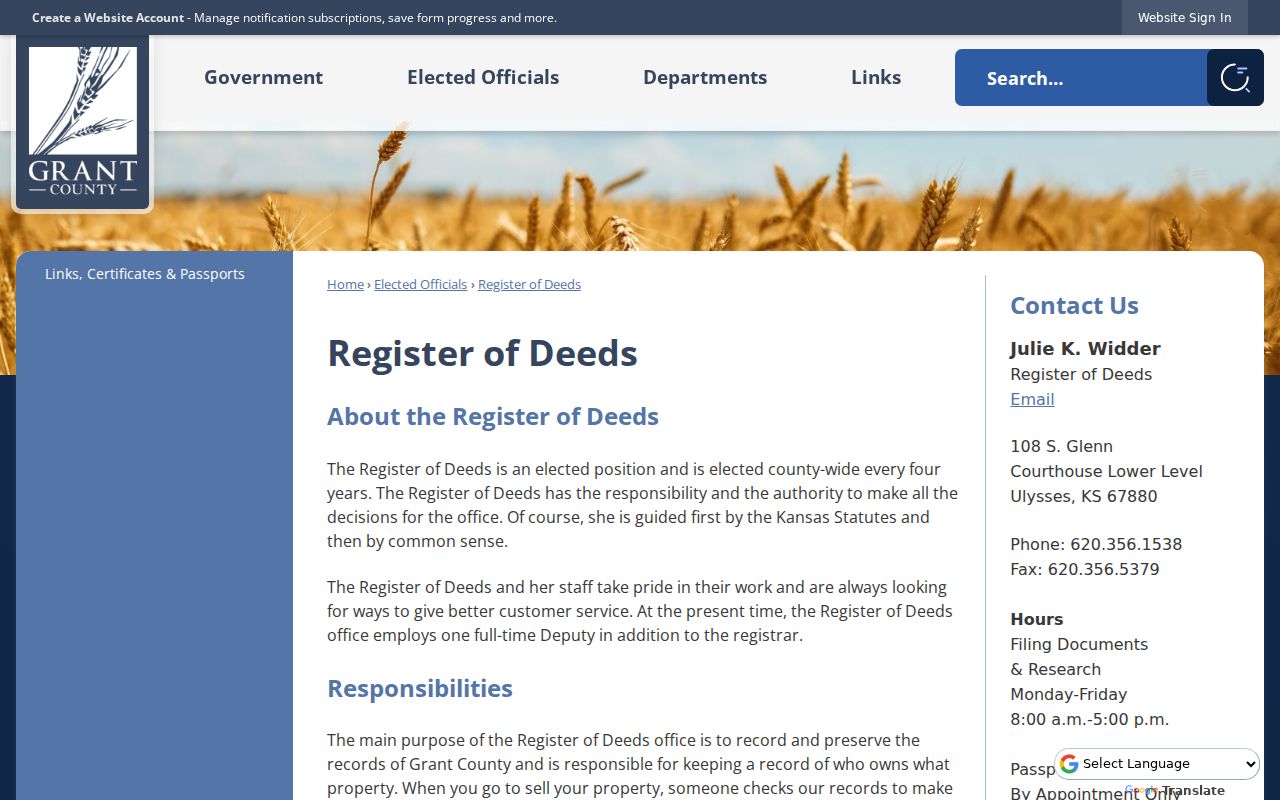
That official page confirms office access and the record categories available. It is not a live deed index. Copy fees are not posted, so call ahead for a mail request and ask for a price estimate.
Grant County Partial Owner Transfers
Quitclaims, correction deeds, and partial conveyances cause the trouble. They can plant apparent duplicates in a Grant County owner chain. Read what the grantor actually conveyed. One deed might cover a single lot. Another might cover a slice of acreage, one co-owner's share, or the surface only. Some deeds reserve a mineral interest. Search the grantor and grantee sides around the same date. Keep every co-owner in the chain until a later deed records that interest out. A correction deed can fix a name or description without creating a new sale. Family deeds may name nominal consideration yet still shift a real interest. Grant County sits in the Hugoton field, so mineral papers matter. Search leases, assignments, releases, lessors, lessees, and operators by legal description. Surface owners and mineral owners often follow two separate histories.
Grant County Probate Chain Breaks
A death certificate moves no real property. A former owner's death calls for two records. Pair the District Court probate file with the Grant County deed record. Search the decedent, the estate, the executor or administrator, each devisee, and later grantees. Court papers can show appointment or sale authority. The deed, affidavit, survivorship paper, or transfer-on-death instrument carries the actual land-record event. The Kansas Courts Public Access Portal serves as one court channel under Rule 22. A courthouse terminal and the clerk file are the others. Portal coverage varies by county. Sealed and protected material stays closed. Cemetery entries, obituaries, and census records can suggest heirs or spelling variants. Treat them as leads. Add a name to the chain only after the probate order or recorded paper confirms it.
Grant County Forced-Sale Owners
Foreclosure can push title through a sheriff deed. A tax sale can do the same through a tax deed, court order, or later resale. Search the District Court case by party and case number. Then match the recorded instrument at the Register of Deeds. A docket lists litigation events but settles nothing by itself. Grant County real and mineral taxes can reach county tax-foreclosure auction after three unpaid years. The Treasurer holds the account, delinquency, and payment side of that story. Newspaper notices may name an owner or tract. The recorded deed remains the chain link, so test it against the legal description. Search releases and satisfactions, not just the original lien. Time alone does not clear an old mortgage. It does not clear a judgment either. Match the later instrument to the first reference and the same land.
Old Ulysses Owner Clues
Ulysses moved in 1909. A pre-move address, townsite, business, or plat may not line up with the modern city. Search Old Ulysses and New Ulysses as separate place terms. Then carry the lot, block, addition, or rural survey description into the deed books. The Grant County newspaper archive holds more than 52,000 pages. Run the name and land clue through both title eras. The Grant County Tribune runs through 1969. The Grant County News runs from 1970 on. Search only one run and a later notice can slip past you. FamilySearch's Grant County census collection spans 1895 through 1982. It can place a household or surname in context. Neither census pages nor newsprint replace a deed. Either can crack a stubborn index spelling.
Grant County Salt-Mine History
The Register of Deeds retains a copy of every recorded document. The office microfilms the full set each year. The reels are stored in the Hutchinson salt mines. That gives former-owner research in Grant County a preservation path with real depth. The web cutoff for online deed records is not published.
The KSHS county microfilm finding aid omits Grant County. That sits oddly beside the register's preservation statement. One claim is local and institutional. The other is a statewide public inventory. Reconcile them by calling the register for the exact reel or volume. Then ask KSHS about cataloged or unlisted material. The finding aid itself documents the statewide route for Grant County property records research.
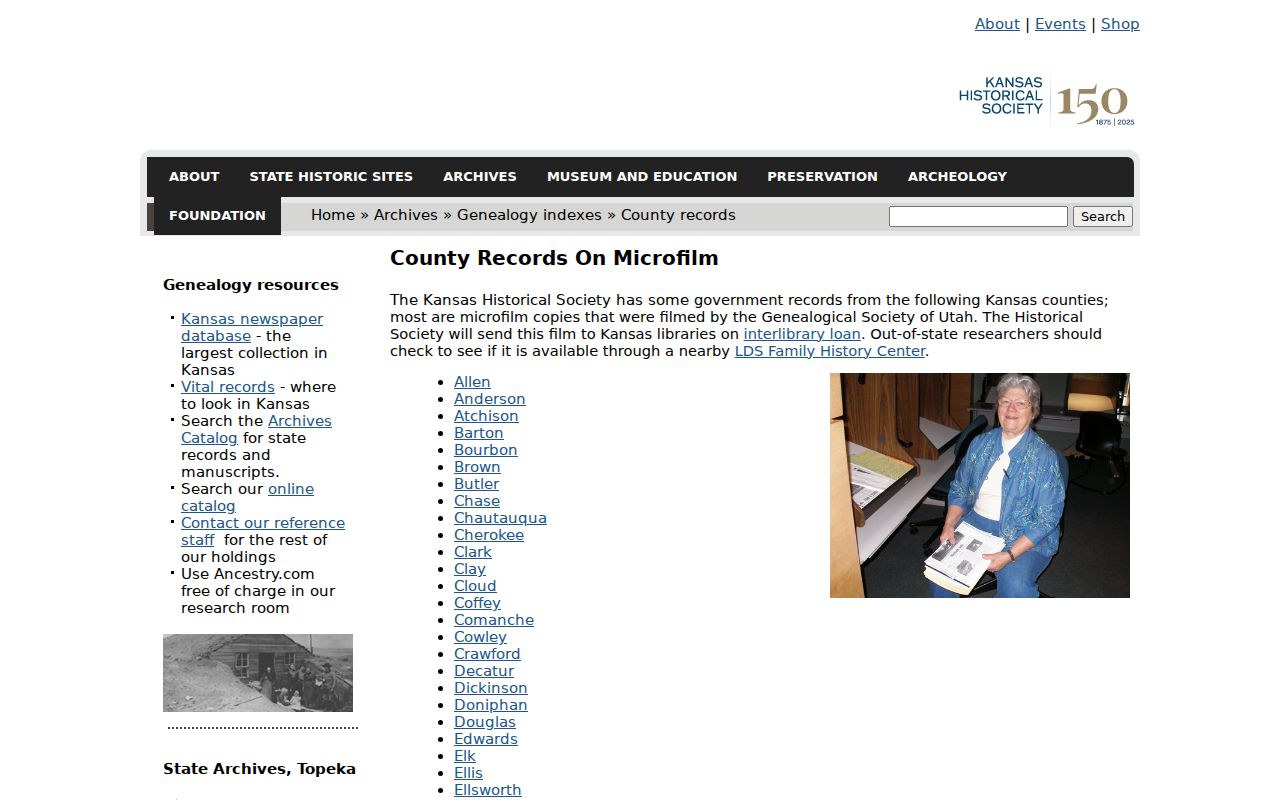
Treat the omission as a prompt for follow-up rather than a claim that records were lost. The county has no known courthouse fire, destroyed-record episode, WPA index, or imaging cutover.
Grant County Ownership Time Depth
How far back can you go? The earliest online year for Grant County deed records is not published. Older transfers live in the Register of Deeds vault, at the counter, on locally retained microfilm, in KSHS land collections. FamilySearch catalog research covers more. Federal and state land files can also precede the county chain. Later deeds cover the private transfers that followed. A search ends when your question is answered or you reach the first government transfer. If a book is missing from a public catalog, note that. Ask staff about the index or preservation copy. Never assume records were lost just because a reel is unlisted.
Use former-owner records lawfully. Grant County ownership history supports title, estate, purchase, and house-history research; never use it to track, harass, or harm a living person.
Keep a search log with each name, date, index, book, page, and legal description. The log exposes a chain break fast and keeps a wrong same-name person out of the property history.
A finished Grant County former-owner chain should show why each person belongs in the sequence. Keep the deed type, recording date, grantor, grantee, book and page or document number together. Add the matching legal description to that same record. Mark every unresolved gap. Do not bridge a gap with a guess. If a copied deed omits an exhibit, request the missing page before going further. Historic context can steer the search. But only the recorded chain in the deed records establishes the true order of owners.